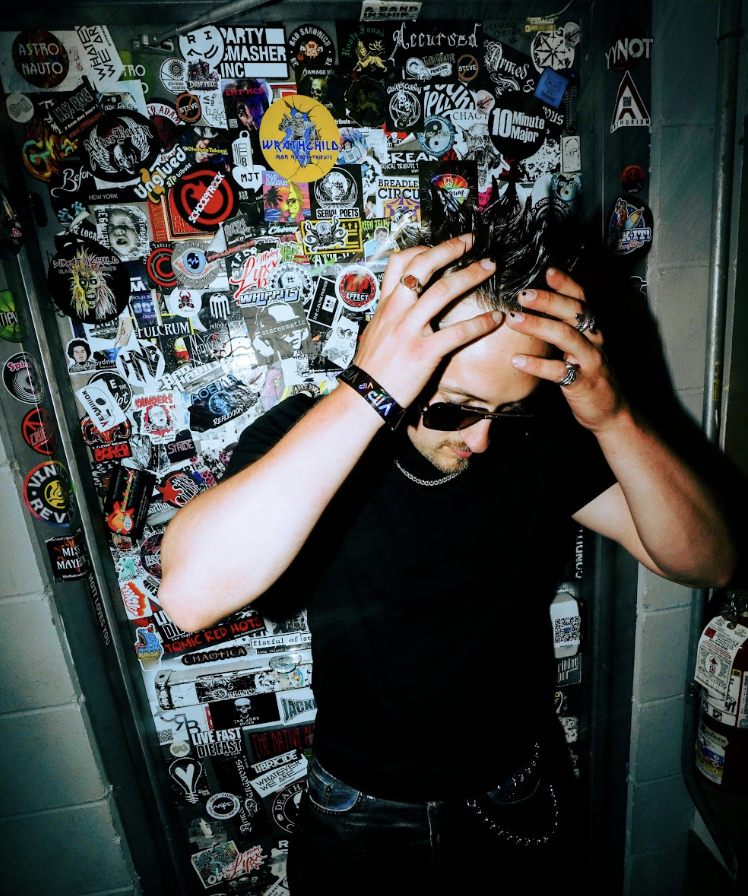
Max Satow of NOSHOWS
Photo by Tori Angier
NOSHOWS:
The Lower East Side’s Grittiest, Genre-Blending Artist
By Surella Shamon
August 15, 2026
Alternative Rock
⋆
Funk
⋆
Indie
⋆
Punk
⋆
Alternative Rock ⋆ Funk ⋆ Indie ⋆ Punk ⋆
Anxiety, Addiction, and Authenticity through sound
For someone discovering NOSHOWS for the first time, how would you describe the project? What do you want people to feel when they hear it?
I’d describe Noshows as high-energy, high-volume alternative rock. I want the music to feel like you’re in a sweaty Lower East Side venue with the band playing right in your face. It’s fun and energetic, but the lyrics are also very vulnerable and honest.
Your sound moves between alternative rock, punk, hip-hop and funk. What made it important for you to let NOSHOWS exist outside of one genre particularly?
I listen to so many different kinds of music that I’d hate to restrict myself to one genre. I’ve been leaning into rock more with newer songs like “The Loop” and “I Don’t Want It,” but I still want to keep things fluid. I’d like to stay true to my eclectic taste in music, so the creative process isn’t limited.
You’ve now passed 20 million streams and played venues everywhere from New York to the UK. When did you first feel like Noshows was becoming something bigger?
It was gradual, but if I had to pinpoint one moment, it would be when “What’s My Name” suddenly took off. The streams jumped overnight and stayed at that level, which completely blew me away. It wasn’t even the song I expected to be the standout from my EP Tightrope, but it ended up resonating with people in a huge way. Seeing something I wrote in my bedroom reach people around the world was incredible. I don’t think we would have ended up playing places like Times Square or getting some of the opportunities we’ve had without moments like that.
Your recent music has leaned more heavily into raw, guitar-driven 90s alternative rock. What pulled you toward that sound?
We had poppier songs on earlier EPs, but there was also a heavier track called “Pieces” on Tightrope. Playing that song live, I felt a really strong connection to it. Going into this record, I started thinking about what kind of music makes me feel the most confident, comfortable and excited onstage. It just so happened to be 90s music and raw New York rock gave me the best feeling onstage. With more touring ahead, it felt like a natural progression to incorporate that.
“I Don’t Want It” feels deeply tied to New York, especially with the music video featuring real Lower East Side people. What does New York bring out of you creatively that you don't think you’d get anywhere else?
New York is full of energy, personality and culture. There’s constant motion, but there’s also a realness to it that influences my music. I wrote “I Don’t Want It” in New York, and it has that early-2000s indie feeling. I wanted the video to capture that spontaneity, so we went out on the street and asked people who had never heard my music to jump in and sing certain lyrics. People brought their own personalities to it, and more people were willing to participate than I expected. That’s what New York is about to me: bringing all kinds of people and personalities into the same space. That’s also what I want the music to do.
That’s very authentic! “The Loop” is also especially personal because you wrote it while you were still in active addiction. What motivated you to share that vulnerability in real-time?
It felt natural because that was what I was living through. I was stuck in this cycle of thinking, “I’m good now. I can control this,” then watching it take over again. I’d stop, start craving it, convince myself I could handle it, and end up back in the same place. “The Loop” came to me while I was experiencing that cycle. It isn’t a song that gives answers. It’s just a raw snapshot of what addiction felt like for me at that moment. I wrote it for myself to express emotions and experiences. I’m glad I captured that moment honestly.
You’ve said “The Loop” wasn’t meant to be an inspirational song or a redemption story. Why was it important to highlight the raw cycle of addition, rather than the recovery afterwards?
Not every story has a lesson while you’re living through it; sometimes you feel hopeless. I wasn’t in recovery when I wrote “The Loop.” I was in a very difficult place and wasn’t even thinking about recovery, I was thinking about the despair and the cycle. I think that’s one of the beautiful things about music: you can write a song while you’re still in something, without needing to know how the story ends. Releasing it has been cathartic. In a way, putting it out into the world lets me move forward from it.
Your family’s connection to The Jed Foundation gives mental and emotional health a very personal connection in your life. How has that shaped the way you think about vulnerability and how you put that into your music?
I grew up in an environment where sharing how you’re feeling, being honest, and vulnerable was a natural thing and it was encouraged, both by my own immediately family and through my experiences with The Jed Foundation. It was just a natural that my music by virtue of me being me ends up being an honest and open expression of darker, complicated things.
It’s great how fans are able to relate to the vulnerable parts, while being excited for the fun. You’re heading into a run of shows with Black Pontiac, including a hometown show at the Sultan Room. What are you hoping for in this next chapter?
I want this chapter to feel louder, bigger and more connected. I’m especially excited to get the album out and perform these songs live. We’ll be playing “Fall Apart,” “I Don’t Want It” and “The Loop,” along with some unreleased material, so it’ll be exciting to see how the crowd responds. Black Pontiac are an awesome band, and we’re really grateful to be touring with them. This chapter is about continuing to grow, staying honest and open, and bringing that raw, fun energy to every show.
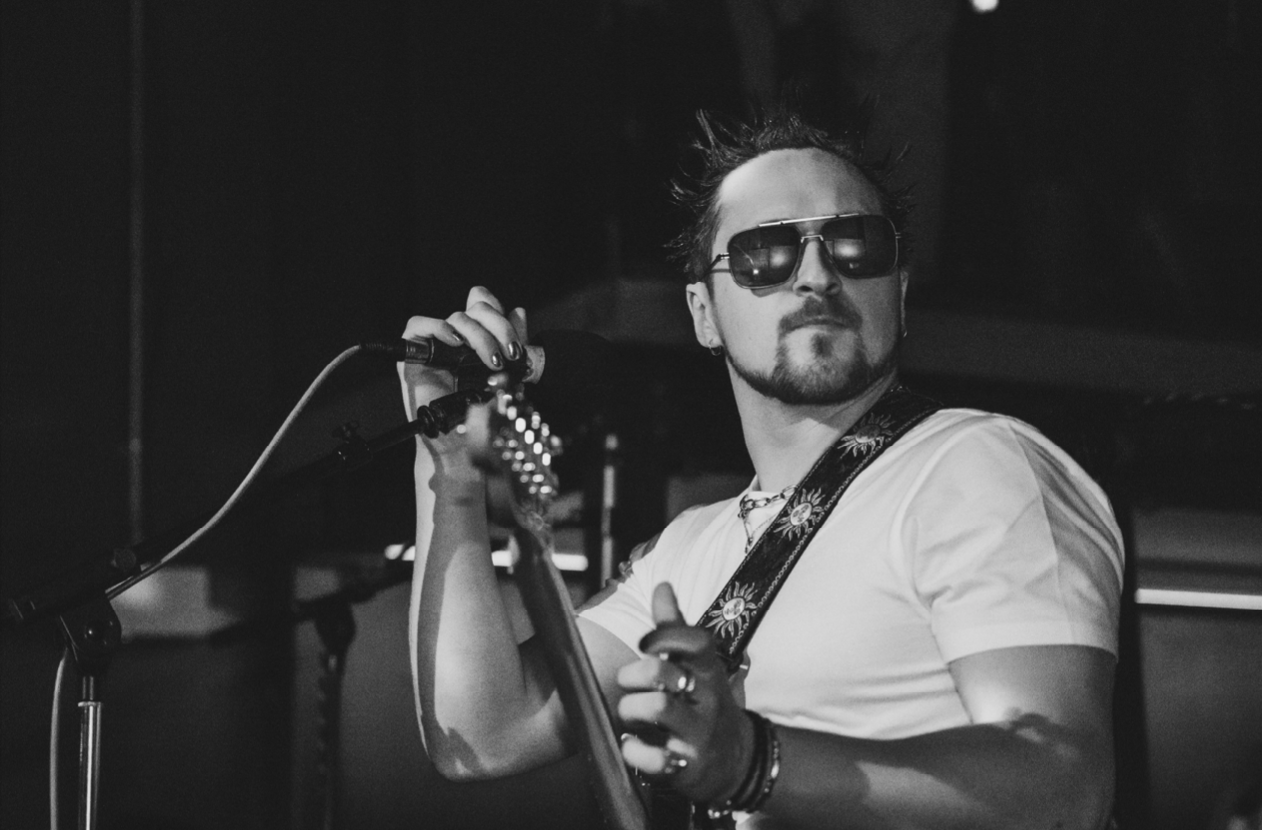
Max Satow of NOSHOWS